Connections
Editor's note. The Product Finder organizes by tier (Engine / Forge / Lab / Backlog) — what posture each product deserves. This page organizes by connection — how products relate to each other. Same kit, different recipes, with shared ingredients showing up everywhere. The composition story.
The visual map
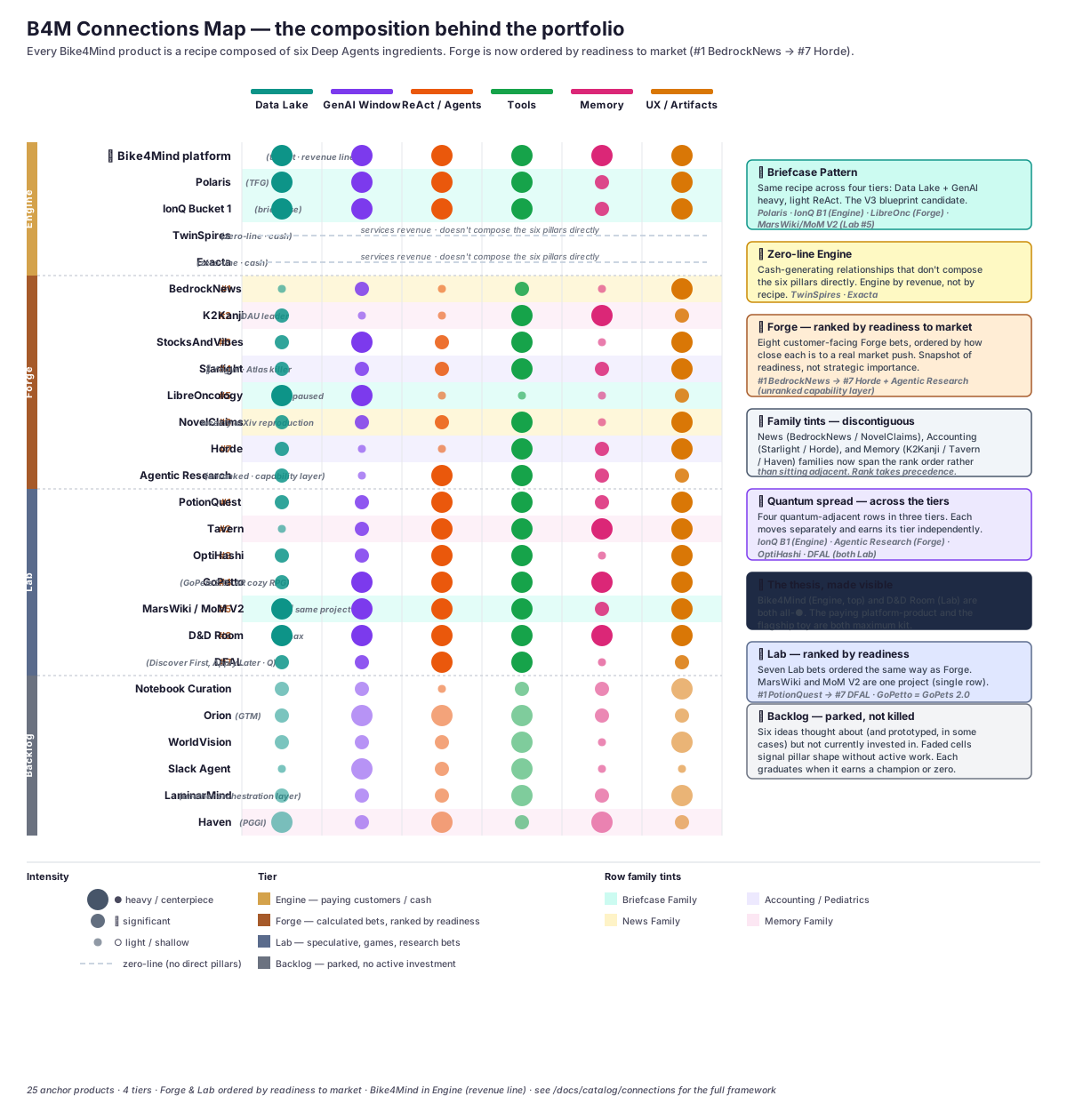
🔍 Tap / click the diagram to open at full size — the SVG scales infinitely (pinch-zoom on mobile, scroll-zoom on desktop).
How to read it in 60 seconds:
- Scan a column (Data Lake, GenAI Window, ReAct, Tools, Memory, UX) → the products with the most-saturated discs in that column share that ingredient at intensity. Three or more heavy discs in a column = V3 blueprint candidate. The Data Lake column has saturated teal discs stacked vertically across Polaris, IonQ Bucket 1, LibreOncology, MoM V2, and MarsWiki — that's the Briefcase pattern shouting across all four tiers.
- Scan a row → the recipe of a single product. Polaris is
●●●●◐●(everything heavy except memory). BedrockNews is○◐○◐○●(UX-heavy, light on everything else). Different shapes; both real. - Zero-line Engine rows (TwinSpires, Exacta) show a dashed bar instead of cells — they're cash-generating relationships that don't compose the six pillars directly. Engine by revenue, not by recipe.
- Look at the row tints → the named families. Pale teal = Briefcase Family (cross-tier). Pale amber = News Family. Pale violet = Accounting/Pediatrics (Horde → Starlight). Pale rose = Memory Family.
- Look at the left stripe → tier. Gold = Engine. Bronze = Forge. Slate = Lab. Medium gray = Backlog. Backlog cells render at reduced opacity to signal “parked, no active investment.”
- Look at the right rail → the named-connection-type callouts (Briefcase pattern, Zero-line Engine, News Family, Subsystem dependency, Quantum spread, Memory Family, all-max thesis, Backlog).
- Two all-● rows anchor the matrix: Bike4Mind platform (Engine, top) and D&D Room (Lab). The paying platform-product and the flagship toy are both maximum kit — the diagram's thesis, made visible.
- Forge is ordered by readiness to market (#1 BedrockNews → #7 Horde, then Agentic Research unranked). Lab is too (#1 PotionQuest → #7 DFAL). Family tints (News, Accounting/Pediatrics, Memory) are now discontiguous — rank takes precedence over family adjacency.
- MarsWiki and MillionOnMars V2 are one project (Lab #5) rendered as a single row. Erik's 2026-05-18 call: knowledge lake (MarsWiki) and Civ-class game (MoM V2 / Civ4x.com) are operationally one Mars-universe bet, not two.
The four kinds of connection
Different products are related in different ways. The framework:
| Connection type | What it means | Examples |
|---|---|---|
| 1. Editorial DNA | Shared brand, voice, audience, or product family. Often a rebrand or sibling launch. | BedrockNews ↔ NovelClaims (the news family) · MillionOnMars V2 ↔ MarsWiki (the Mars universe) |
| 2. Subsystem dependency | One product uses a component built by another. Concrete code or data flows between them. | Starlight Pediatrics ← Horde (accounting / invoicing engine) · Always Live Market Model ← Horde (Tessera pro-forma) · MillionOnMars V2 ← MarsWiki (data lake) |
| 3. Primitive composition | Products that share the same recipe of Deep Agents ingredients. Not the same code — the same architectural shape. | Polaris briefcase / IonQ Bucket 1 / LibreOncology / MarsWiki all = data lake + GenAI window heavy, lighter agentic |
| 4. Domain overlap | Different products attacking the same conceptual problem. The work in one feeds the other. | NovelClaims ↔ Q/Work (paper reproduction) · Tavern ↔ PotionQuest (agentic game experiences) · WorldVision ↔ D&D Room (vision+physical AR) |
The four overlap. A subsystem dependency often comes with primitive composition. Editorial DNA often comes with domain overlap. Use whichever lens makes the relationship clear.
The composition matrix
Every product is some mix of the Deep Agents ingredients. The matrix shows how heavily each ingredient shows up in each product. Reading the columns top-to-bottom shows you who else does this kind of work and might benefit from your patterns.
Intensity legend: ● heavy / centerpiece · ◐ significant · ○ light or shallow · — not part of this product · dashed line = zero-line (no direct pillar use)
| Product | Data Lake | GenAI Window | ReAct / Agents | Tools | Memory | UX / Artifacts | Notes |
|---|---|---|---|---|---|---|---|
| Engine | |||||||
| 🐝 Bike4Mind (platform) | ● | ● | ● | ● | ● | ● | Forge → Engine 2026-05-18. The platform itself. All-● by definition. |
| Polaris (TFG) | ● | ● | ● | ● | ◐ | ● | Full Deep Agents stack. The reference implementation. |
| IonQ Bucket 1 | ● | ● | ● | ● | ◐ | ● | Same shape as Polaris briefcase, quantum domain. |
| TwinSpires (BeeHive + OneBris) | — zero-line: services revenue, doesn't compose the six pillars directly — | Cash-generating Engine relationship; no direct B4M pillar use. | |||||
| Exacta | — zero-line: services revenue, doesn't compose the six pillars directly — | Cash-generating Engine relationship; no direct B4M pillar use. | |||||
| Forge — ordered by readiness to market (#1 BedrockNews → #7 Horde, Agentic Research unranked) | |||||||
| #1 BedrockNews 🛠️ | ○ | ◐ | ○ | ◐ | ○ | ● | UX / editorial heavy. News is a UX product. |
| #2 K2Kanji | ◐ | ○ | ○ | ● | ● | ◐ | DAU leader; spaced-repetition + memory. |
| #3 StocksAndVibes 🛠️ | ◐ | ● | ◐ | ● | ○ | ● | Stocks + options + paper trading + education. |
| #4 Starlight Pediatrics ⭐ | ◐ | ◐ | ◐ | ● | ◐ | ● | Inherits Horde's accounting subsystem. |
| #5 LibreOncology ⏸️ | ● | ● | ○ | ○ | ○ | ◐ | Pure data lake + GenAI window. Relatively light agentic work. |
| #6 NovelClaims 🌱 | ◐ | ◐ | ◐ | ● | ○ | ● | BedrockNews UX + paper reproduction tools (= Agentic Research overlap). |
| #7 Horde | ◐ | ○ | ○ | ● | ◐ | ● | Accounting tools + invoice UX + cap-table data. Underneath Starlight. |
| unranked Agentic Research (was IonQ B2) | ◐ | ○ | ● | ● | ◐ | ◐ | Capability layer that feeds NovelClaims; not GTM-ready on its own yet. |
| Lab — ordered by readiness to market (#1 PotionQuest → #7 DFAL); unranked sketches below | |||||||
| #1 PotionQuest | ◐ | ◐ | ● | ● | ◐ | ● | Tools (D&D random generators) + RPG world (data lake). |
| #2 Tavern | ○ | ◐ | ● | ● | ● | ● | Agentic loop + heartbeats + journals. Pure agent runtime. |
| #3 OptiHashi | ◐ | ◐ | ● | ● | ○ | ● | Engine → Lab 2026-05-18. NL → QUBO → solver race → artifact. |
| #4 GoPetto (GoPets 2.0) | ◐ | ● | ● | ● | ● | ● | Virtual pets + strong AI + mobile AR cozy RPG. Near-all-● mobile experience. |
| #5 MarsWiki / MoM V2 🪐 | ● | ● | ● | ● | ◐ | ● | One project, 2026-05-18. Knowledge lake + Civ-style game; data-lake heavy. |
| #6 D&D Room | ● | ● | ● | ● | ● | ● | All-in flagship. Every ingredient at max intensity. |
| #7 DFAL | ◐ | ◐ | ● | ● | ○ | ◐ | Quantum-computing research bet upstream of OptiHashi / Agentic Research. |
| unranked Bacteria Wars / Orc Hunter / Chess / Mythos / AgentCFO | ○ | ○ | ◐ | ● | ○ | ● | Lab sketches; alive on the page, not yet ranked. |
| Backlog — parked / pre-Lab, faded cells signal no active investment | |||||||
| Notebook Curation | ◐ | ◐ | ○ | ◐ | ◐ | ● | UX-heavy — turning conversations into citable artifacts. |
| Orion (GTM hunter) | ◐ | ● | ● | ● | ◐ | ◐ | Sales-domain Deep Agent. Built with B4M, sells B4M. Awaits an outbound-motion moment. |
| WorldVision | ◐ | ◐ | ◐ | ● | ○ | ● | Vision tools + physical-world bridge. Platform piece parked; D&D Room demo lives in Lab. |
| Slack Agent | ○ | ● | ◐ | ● | ○ | ○ | Tool-heavy. Lives on inside Bike4Mind; not separately positioned. |
| LaminarMind / B4M Pi | ◐ | ◐ | ◐ | ● | ◐ | ● | Another agent-orchestration layer; parked. |
| Haven | ● | ◐ | ● | ◐ | ● | ◐ | Memory + persistence centerpiece (PGGI lineage). Re-parked. |
What the matrix tells you. A column of mostly ● tells you which products should share patterns. If you find yourself solving the same problem twice in two products that score ● in the same column, that's a B4M V3 blueprint candidate.
Connection map
The named relationships, grouped by connection type. Each line says X ↔ Y because Z.
Editorial DNA
- BedrockNews 🛠️ ↔ NovelClaims 🌱 — the news family. Same editorial DNA (reliable, authentic, readable, clean), different domains (general news vs science/STEM). NovelClaims adds agentic paper reproduction over arXiv.
- MillionOnMars V2 🪐 ↔ MarsWiki 🪐 — the Mars universe. The game and the knowledge base feed each other. MarsWiki is the canon; V2 is the playable experience.
- Tavern ↔ PotionQuest ↔ GoPetto — the agentic-orchestrator game family. All explore “subjective, entertaining agentic orchestrators” per the April 4 update.
- Cerebo ↔ Proxima ↔ Orion — the GTM agent family. Cerebo (general) and Proxima (enterprise B2B) compose into Orion (B4M-specific). See GTM section.
Subsystem dependency
- Starlight Pediatrics ← Horde — Starlight inherits Horde's accounting / invoicing / cap-table engine. The accounting section is shared code, not a parallel build.
- Always Live Market Model ← Horde (Tessera) — the pro-forma engine inside Horde becomes a composable package powering market models too.
- MillionOnMars V2 / Civ4x ← MarsWiki — the game reads from the data lake. Curated MoM canon + space/STEM corpus.
- Polaris ← Bike4Mind — Polaris is built on B4M; every B4M platform improvement lifts Polaris.
- BeeHive / OneBris ← Bike4Mind — same: the TwinSpires products inherit the B4M substrate.
- OptiHashi ← Bike4Mind — the conversational optimization engine runs on B4M's agentic + tool + artifact primitives.
- Orion ← Bike4Mind — the GTM hunter agent is itself a B4M deployment. The hunter hunts with the very tools it's selling.
- Haven ← Mementos + Artifacts + Deep Agents + Ember (PGGI primitive) — the digital-immortality product wraps the private-memory experiment.
- D&D Room ← WorldVision + Deep Agents + thousands of bespoke tools — the flagship use case composes the perceptual layer + the agentic mind + a domain-specific tool chest.
Primitive composition
Products that share the same Deep Agents recipe (data lake + GenAI window heavy, lighter agentic) — the “briefcase” pattern:
- Polaris briefcase (TFG analyst experience)
- IonQ Bucket 1 (quantum sales briefcase)
- LibreOncology ⏸️ (medical education content over a curated lake)
- MarsWiki 🪐 (the lake itself, exposed via GenAI window)
- PotionQuest world (RPG world data lake exposed alongside the generator tools)
This is the “data lake + GenAI window” pattern Erik calls out as showing up everywhere. It's exactly the column-of-● pattern in the matrix above: Data Lake = ●, GenAI Window = ●, ReAct = ○ or ◐. When a new domain shows up needing this shape, all five of these implementations are precedent.
Products that share the “tools-heavy” recipe:
- PotionQuest (D&D random generators)
- Slack Agent (Jira / Confluence / GitHub via MCP)
- OptiHashi (Quantum Schedule, Quantum Formulate, plus solver race)
- K2Kanji (spaced-repetition trainers)
- Smart Tools catalog inside B4M (the underlying capability)
Products that share the “memory-heavy” recipe:
- Haven (PGGI persistence)
- Tavern (per-agent journals, mood, XP, reputation)
- Mementos (the substrate)
- K2Kanji (spaced-repetition itself is memory engineering)
Domain overlap
- NovelClaims ↔ Agentic Research (was IonQ Bucket 2) — both attack paper reproduction. NovelClaims is the public-facing front (one full reproduction per week); Agentic Research is the deep capability layer (Iter-QAOA, Q/Work, augmented Jupyter). Tooling and learnings flow between them.
- WorldVision ↔ D&D Room — same vision primitive, different ambition (mobile app vs full physical-AR room).
- WorldVision ↔ Magic Mirrors ↔ Mobile Mirrors ↔ Full Robotics — the physical-AI progression. Same perceptual API, growing body. See the 2026 roadmap Appendix C.
- Horde ↔ Lattice — both work in financial modeling. Horde is the production accounting engine; Lattice is the conversational pro-forma artifact. The Tessera package bridges them.
- Tavern ↔ PotionQuest — agentic-game runtime patterns; cross-pollination expected.
- Polaris CYA ↔ Choose Your Adventure prototypes — the babelfox.com / deepak-cpo.netlify.app prototypes feed directly into the Polaris CYA mega-epic.
How to use this page
- Adding a new product? Drop it in the matrix first — what's its recipe? That tells you which existing products share its patterns and where to look for blueprints / prior art.
- Designing a new feature? Check which other products have ● in the same column. If three products share an ingredient at intensity ●, that's a V3 blueprint candidate (or already is one).
- Killing or pausing a product? Check the connection map — what depends on it? LibreOncology paused, but its “data lake + GenAI window” pattern is the same shape that Polaris briefcase, IonQ Bucket 1, and MarsWiki need. The pattern doesn't pause; only this specific instance does.
- Promoting a Lab toy to Forge? Check whether its primitives already exist as blueprints (look for ● columns shared with mature products). If they do, the lift is generation-time, not code-write-time.
This is a living artifact. The matrix is approximate — correct it where it's wrong. The connections list is incomplete — add the ones we missed. When a relationship matters enough to act on, it deserves a row.